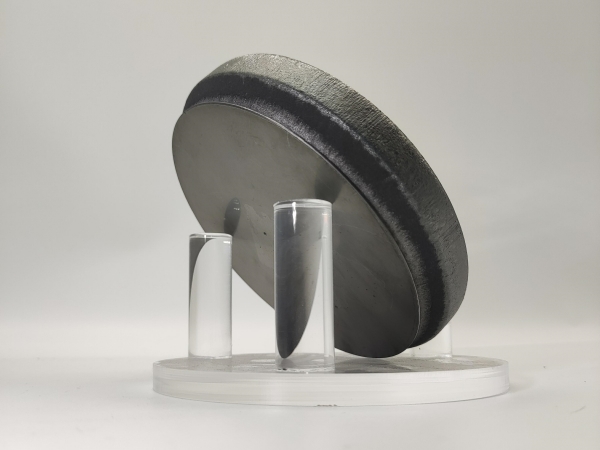
In modern LED chip manufacturing, patterned sapphire substrates (PSS) serve as a core underlying technology that breaks the performance limitations of conventional flat sapphire substrates (FSS). It is widely acknowledged that PSS improves crystal quality by suppressing epitaxial threading dislocations and enhances light extraction efficiency (LEE) via micro-nano light scattering structures. However, simple adoption of standard PSS cannot meet the high-performance requirements of advanced LEDs in mass production and device optimization.
PSS is not a standardized structure. Its structural parameters, including pattern dimension, geometry, aspect ratio, spacing, sidewall inclination angle, and lattice arrangement, directly regulate the epitaxial growth kinetics of GaN/AlN and the internal light propagation behavior of LED chips. Ultimately, these microstructural features dominate the internal quantum efficiency (IQE), light output power (LOP), external quantum efficiency (EQE), and polarized light extraction capability of LED devices.
Combining extensive experimental data and optical simulation results, this article systematically elaborates the correlation mechanism between PSS structural parameters, epitaxial characteristics, and device performance. The discussion covers scale effects, geometric morphology classification, key dimensional parameters, innovative composite PSS structures, and applications in semipolar LEDs, providing a complete theoretical guideline for structural optimization of high-performance visible, ultraviolet (UV), and deep ultraviolet (DUV) LEDs.
1. Scale Effect: Differentiated Regulation Mechanisms of Microscale and Nanoscale PSS
According to characteristic feature sizes, PSS can be divided into microscale patterned sapphire substrates (MPSS) and nanoscale patterned
sapphire substrates (NPSS). The two types exhibit distinct dislocation suppression and optical modulation mechanisms, making them suitable for LED devices operating in different wavelength bands.
NPSS with nanohole hexagonal arrays fabricated by nanoimprint lithography (NIL) has become a mainstream solution for high-efficiency LEDs. A typical NPSS structure with a pore diameter of 250 nm and a period of 450 nm achieves an ultra-low threading dislocation density (TDD) of 3.6×10
8cm
-2 at the GaN/NPSS interface. TEM characterization reveals the underlying dislocation suppression mechanism: dislocations originating from the etched sapphire bottom are blocked by interfacial voids, while dislocations generated on the inclined sidewalls deflect and propagate laterally. Only a small number of dislocations formed on unetched flat regions can extend to the active region, significantly reducing the density of non-radiative recombination centers.
 Figure 1: Cross-sectional TEM of FSS and NPSS epitaxial interfaces, schematic dislocation evolution, and IQE/EQE curves of NPSS-based LEDs
 Compared with traditional FSS-based LEDs, NPSS devices achieve prominent improvements in IQE and EQE. Different from the pure light-scattering enhancement of MPSS, periodic subwavelength nanostructures produce a photonic crystal effect. The coherent interference of scattered light further optimizes the optical path, realizing dual enhancement of light extraction.
NPSS exhibits more significant advantages in DUV LED applications. DUV LEDs contain abundant transverse magnetic (TM) polarized photons, which propagate laterally at large incident angles and are easily trapped by total internal reflection (TIR). FDTD simulation results verify that NPSS effectively enhances the extraction efficiency of TM-polarized light. Compared with DUV LEDs with conventional roughened n-AlGaN surfaces, NPSS-based flip-chip DUV LEDs achieve approximately 50% higher LEE. When combined with mesh p-GaN structures, NPSS simultaneously optimizes the extraction of both transverse electric (TE) and TM polarized light, fundamentally solving the polarization light loss bottleneck of UV LEDs.
 Figure 2: Simulation models and LEE comparison of different flip-chip DUV LED structures
 Notably, the performance of PSS does not simply improve with decreasing size. Experimental results confirm that ultra-small NPSS may lead to increased etch pit density and broader X-ray rocking curve FWHMs, resulting in degraded crystal quality compared with optimized MPSS. The core rule is clear: subwavelength nanostructures and microstructures with optimized aspect ratios deliver optimal LEE enhancement, while near-wavelength-scale diffraction fails to effectively improve light extraction. Therefore, structural size must be matched with the LED emission wavelength.
2. Morphology Selection: Performance Characteristics and Application Scenarios of Typical PSS Structures
Geometric morphology determines the light scattering efficiency and epitaxial growth mode of PSS. Commercially prevalent PSS shapes include cone, stripe, volcano, hemisphere, hole, and pillar. Each morphology possesses unique sidewall configurations, growth window characteristics, and optical modulation capabilities, targeting different LED application scenarios.
2.1 Cone-shaped PSS: Balanced and Commercialized Structure
Cone-shaped PSS is the most mature and balanced structure for mass production. Its inclined sidewalls induce efficient lateral overgrowth of GaN, promote dislocation bending and annihilation, release compressive strain, and mitigate the quantum-confined Stark effect (QCSE). Experimental data shows that cone PSS with a height of 1.2 μm and a bottom diameter of 3 μm increases LED IQE from 50% to 56%.
Unlike flat-top PSS that initiates synchronous growth across etched and unetched regions, cone-shaped PSS triggers GaN growth only on c-plane basal surfaces, minimizing defects generated during coalescence. Cone PSS with embedded air voids fabricated via laser scribing and hot phosphoric acid etching further breaks the TIR limit by utilizing the high refractive index contrast between air and GaN, greatly boosting light extraction performance.
2.2 Stripe-shaped PSS: Exclusive Structure for Semipolar LEDs
Stripe PSS exhibits strong anisotropic growth characteristics. Increasing the groove depth from 0.2 μm to 0.9 μm expands the lateral growth region, reduces crystalline defects, and enhances photoluminescence intensity. Stripes fabricated along specific sapphire orientations enable bilateral lateral epitaxy, lower TDD, and improve the LOP of UV LEDs by 20%.
The most prominent advantage of stripe PSS is the selective growth of high-quality semipolar GaN on inclined sidewalls. It serves as a low-cost and scalable solution for semipolar LED fabrication, effectively suppressing wavelength blueshift and polarization-induced efficiency degradation in conventional c-plane LEDs.
2.3 Volcano-shaped PSS: High-Scattering Structure for UV Optoelectronics
Volcano-shaped PSS features multi-faceted sidewalls and crater cavities, providing far more scattering interfaces than cone or hemisphere structures, which is highly suitable for UV LEDs. Ray-tracing simulations demonstrate that volcano PSS with an optimized crater inclination angle of ~50° improves the LEE of 380 nm UV LEDs by 60% compared with hemispherical PSS.
 Figure 3: SEM morphology, angle-dependent simulation, and LEE comparison of volcano-shaped PSS
 Volcano PSS fabricated via colloidal templating and nanoimprinting can embed SiO₂ layers to suppress abnormal GaN growth and reduce dislocation proliferation. Conical air voids formed inside the craters reverse the internal optical path and redirect trapped photons toward the top emission surface. FDTD simulations confirm that SiO₂-modified volcano structures mitigate refractive index mismatch, further improving the extraction efficiency of confined light.
 Figure 4: TEM images, optical path simulation, and intensity comparison of modified volcano PSS
2.4 Hole, Pillar and Special-Shaped PSS: Customized Optimization for Advanced Devices
Hole-type NPSS delivers superior crystal quality compared with pillar-type NPSS. Hexagonal nano-holes reduce the epitaxial coalescence area and suppress dislocation multiplication. The AlN film grown on hole-shaped NPSS exhibits an order-of-magnitude lower TDD than pillar structures, boosting the IQE of AlGaN multiple quantum wells (MQWs) up to 73.9%. Additionally, hole-type structures introduce appropriate tensile strain, facilitating ultra-flat and low-defect UV epitaxial layers.
Special microstructures including truncated pyramids, moth-eye patterns, double-sided architectures, and spherical caps provide unique optical advantages. Moth-eye microstructures weaken TIR at the sapphire–air interface and double the LEE of DUV LEDs. Double-sided hemispherical PSS enhances TM-polarized light extraction by 11.2 times. Spherical cap PSS further optimizes incident angles to achieve higher light output gain than conventional hemispherical structures.
3. Fine Regulation of Geometric Parameters: Performance Optimization Logic from Dimension to Arrangement
Based on fixed morphologies, subtle adjustments of PSS height, diameter, aspect ratio, spacing, sidewall angle, and lattice arrangement precisely regulate epitaxial dynamics and optical propagation, enabling iterative performance optimization of LED devices.
3.1 Height and Depth: Threshold-Dominated Key Parameters
PSS height and depth follow an optimal window rather than a monotonic trend. Pillar NPSS with a height of 250 nm presents the highest emission intensity and best efficiency droop suppression; excessive height blocks surface light emission while insufficient height causes inadequate scattering. For hole-type PSS with fixed diameter and spacing, structures with an etching depth of 1.5 μm achieve a peak EQE of 14.1%, with emission intensity 63% higher than FSS devices.
3.2 Pore Diameter: Regulating Nucleation and Dislocation Annihilation
Pore diameter directly controls initial nucleation density and dislocation bending behavior. Hexagonal NPSS with an optimized diameter of 650 nm enables low-temperature full coalescence of AlN films. Interfacial dislocations are fully bent and terminated by image force effects, maximizing the crystal quality and luminous efficiency of deep-UV devices.
3.3 Aspect Ratio: Core Balance Factor Between Crystal Quality and Light Extraction
The aspect ratio (height/diameter) is the decisive parameter balancing defect suppression and optical scattering. Excessively high aspect ratios induce massive internal voids that trap photons and reduce brightness; low aspect ratios feature gentle sidewalls and complete GaN coverage but weaken lateral growth and dislocation suppression.
NPSS with an aspect ratio of 2.0 promotes dominant lateral epitaxy, reduces TDD, and optimizes carrier mobility and concentration. Optimized hemispherical PSS increases device LOP from 12.6 mW to 14.4 mW and EQE from 19.4% to 23.5% (@20 mA).
 Figure 5: Morphology and EQE curves of NPSS with different heights, and TEM comparison of different aspect ratios
3.4 Pattern Spacing: Strain Modulation and Efficiency Tuning
The relationship between pattern spacing and LED performance is nonlinear. EQE first increases and then decreases with rising spacing. Appropriately reduced spacing releases compressive strain, suppresses QCSE, and improves radiative recombination efficiency. Blue LEDs fabricated on 200 nm-spacing NPSS achieve a maximum EQE of 54%, far exceeding the 35% of FSS-based devices.
3.5 Inclination Angle and Symmetry: Fine Tuning for Ultimate Performance
Sidewall inclination angle dominates the lateral growth area of GaN. Reducing the cone angle from 57.4° to 31.6° enlarges the epitaxial growth region, synchronously improving crystal quality and light extraction. The 31.6° inclined structure delivers optimal luminous intensity and output power.
Lattice arrangement also significantly affects performance. Hexagonal lattice PSS possesses higher symmetry, enabling sufficient strain relaxation, weaker QCSE, and alleviated efficiency droop, thereby achieving higher LOP and stability than square lattice PSS.
4. Advanced Composite PSS Structures: Breaking the Performance Limit of Traditional Architectures
To overcome the bottlenecks of single-structure PSS, innovative composite designs including patterned sapphire with silica array (PSSA), nano-micro complex PSS (NMCPSS), and serpentine channel PSS (SCPSS) have been developed. These structures integrate multiple advantages to achieve simultaneous improvements in crystal quality and optical performance.
PSSA replaces traditional sapphire patterns with silica cone arrays to optimize epitaxial growth and suppress coalescence misfit dislocations. STEM characterization confirms that AlGaN dislocations are effectively bent and terminated on silica surfaces, blocking vertical dislocation propagation. At 150 mA injection current, PSSA devices exhibit 26.1% higher EQE than conventional PSS and double the efficiency of FSS devices.
The larger refractive index contrast between SiO₂ and GaN expands the light escape angle, collimates the output beam, and significantly enhances the light extraction of top-emitting UV LEDs and flip-chip blue LEDs.

 Figure 6 & 7: STEM morphologies and optical trajectory comparison of PSS and PSSA
4.2 Nano-Micro Complex PSS (NMCPSS)
NMCPSS integrates nanostructures on traditional microscale PSS surfaces, combining the high-quality epitaxial growth of micro-patterns and the strong light-scattering capability of nano-patterns. The microscale substrate guarantees low-defect epitaxy, while embedded nanostructures act as Lambertian scatterers to diffuse trapped light into the escape cone.
Experimental and FDTD results show that NMCPSS improves LEE by 63% compared with FSS and 20.4% compared with conventional MPSS. Green LEDs on NMCPSS achieve 28.6% higher LOP (@20 mA) and a maximum EQE increase from 31.7% to 46.2%, with significantly mitigated efficiency droop.
4.3 Serpentine Channel PSS (SCPSS)
SCPSS adopts periodic serpentine masks fabricated by multilayer dielectric deposition, enabling hierarchical dislocation blocking and annihilation. Dislocations generated from bottom windows terminate inside serpentine channels, while vertically propagating dislocations are blocked by overhanging dielectric masks, drastically reducing overall TDD.
Moreover, SCPSS modulates periodic stress distribution in epitaxial films, relieving compressive strain in MQWs. The corresponding IQE is 52% higher than that of conventional sapphire-based LEDs, making SCPSS a promising structure for high-stability and high-efficiency LED fabrication.
 Figure 8: SCPSS structure, dislocation evolution, and stress performance comparison
5. Unique Applications of PSS in Semipolar LEDs
Conventional c-plane GaN LEDs suffer from severe QCSE induced by strong internal polarization fields, causing wavelength blueshift and degraded carrier recombination efficiency. Although bulk GaN substrates can produce high-quality semipolar LEDs, their high cost and limited wafer size restrict large-scale commercialization. Stripe-shaped PSS provides a low-cost alternative by enabling selective growth of low-defect semipolar GaN on inclined sidewalls.
PSS-based (20-21) semipolar blue LEDs effectively suppress blueshift and achieve a peak IQE of 52%. Optimized nucleation and void engineering enable defect-minimized epitaxy without indium clusters. Meanwhile, (11-22) semipolar green micro-LEDs exhibit size-independent stable EQE, solving the efficiency degradation problem of microscale devices and supporting large-area display applications.
Furthermore, PSS-based semipolar white LEDs achieve an ultra-high modulation bandwidth of 660 MHz for visible light communication (VLC). The PSS morphology tailors light field distribution, improving packaging efficiency and illumination uniformity.
6. Summary and Technical Outlook
The performance enhancement of PSS-based LEDs originates from the synergistic regulation of
morphology, scale, geometric parameters, and composite engineering. Microscale PSS primarily optimizes epitaxial growth and reduces dislocations to improve IQE, while nanoscale PSS focuses on optical scattering and polarized light extraction to boost LEE. Diversified morphologies target specific LED wavebands and device architectures, while refined geometric parameters determine the optimal process window for device performance.
With the rapid development of solid-state lighting, UV disinfection, high-definition displays, and visible light communication, conventional single-structure PSS can no longer satisfy the demands of high-end optoelectronic devices. Emerging technologies including nano-micro composite structures, dielectric modification, special morphology design, and semipolar epitaxy continuously break the upper limits of LED IQE, LEE, and stability. In the future, precise parameter iteration based on multi-physics simulation and innovative micro-nano structure design will become the core research direction for mass production of high-efficiency full-spectrum LEDs.