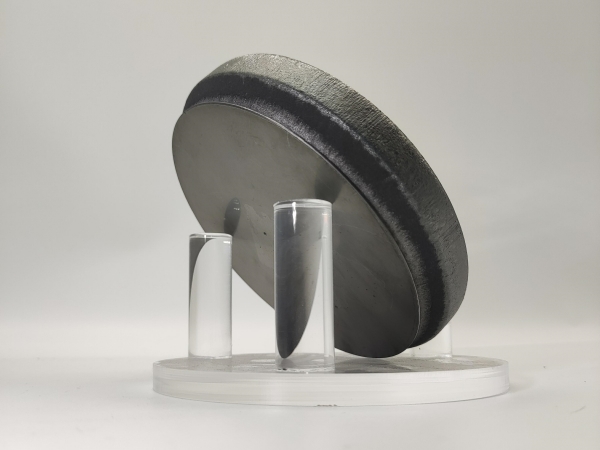
Nowadays, III-nitride LEDs have become the core of solid-state lighting, display backlighting, and ultraviolet optoelectronic devices. However, traditional LEDs grown on flat sapphire substrates (FSS) are plagued by low luminous efficiency, poor crystal quality, and high device loss, which seriously restrict their performance and service life. As a mature and efficient substrate modification technology, Patterned Sapphire Substrate (PSS) can simultaneously optimize the internal crystal quality and external light output capability of LEDs, becoming a key technology for high-efficiency LED mass production.
The overall luminous performance of LEDs is evaluated by External Quantum Efficiency (EQE), which is determined by two core indicators: Internal Quantum Efficiency (IQE) and Light Extraction Efficiency (LEE). The quantitative relationship is as follows:
EQE=IQE*LEE
Simply put, IQE determines how many photons are generated inside the LED, while LEE determines how many generated photons can escape out of the chip. PSS technology achieves dual improvement of IQE and LEE at the same time, fundamentally breaking the performance bottleneck of traditional flat-substrate LEDs. This article will explain the working principles and technical advantages of PSS from the perspectives of crystal defect suppression and light extraction enhancement.
1. PSS Reduces Dislocation Defects and Improves Internal Crystal Quality
The root cause of low IQE in traditional LEDs lies in high-density crystal defects. Since there is a huge mismatch in lattice constant and thermal expansion coefficient between flat sapphire substrates and III-nitride epitaxial layers, heteroepitaxial growth will inevitably produce a large number of defects, including threading dislocations, point defects, stacking faults, V-pits and trench defects.
Among these defects,
dislocations and point defects are the main killers of LED luminous efficiency. They form non-radiative recombination centers inside the chip, capturing photogenerated carriers and consuming energy in the form of heat instead of light. This not only reduces the internal photon generation efficiency but also triggers common industry problems such as efficiency droop and green gap, severely limiting LED performance.
1.1 Comparison of Traditional Defect Reduction Technologies and PSS Advantages
In order to reduce threading dislocation density (TDD) in epitaxial layers, traditional technologies such as Epitaxial Lateral Overgrowth (ELO) have been widely studied. The ELO process requires pre-growing thick GaN films and then fabricating patterned masks for selective growth. However, this method needs to interrupt the growth process, which is time-consuming and easy to introduce impurities to pollute the epitaxial layer.
In contrast, PSS completes substrate patterning before epitaxial growth, realizing a continuous, pollution-free one-step growth. The periodic patterned structure on PSS can effectively block and bend dislocation propagation at the substrate-epilayer interface, greatly reducing the defect density of the LED active region.
1.2 Microscopic Mechanism of PSS Suppressing Dislocations
 Figure. 1TEM images of GaN epitaxial layer grown on (a–c) FSS and (d–f) PSS. Formation and propagation mechanism of dislocation with (g–h) FSS and (i–j) PSS.
 TEM microscopic characterization clearly verifies the defect suppression effect of PSS. The screw and edge dislocation densities of GaN films grown on PSS are far lower than those of flat substrate samples. On flat
sapphire substrates, dislocations originate from internal crystal boundaries and cannot be eliminated during high-temperature growth, resulting in persistent high defects.
The patterned structure of PSS provides sufficient space for Epitaxial Lateral Overgrowth (ELOG). It reduces the number of initial GaN nucleation islands, promotes dislocation bending and mutual annihilation, and greatly inhibits the formation of V-defects. Benefiting from the optimized crystal quality, PSS-based LEDs have lower reverse leakage current and higher device stability, with 13% higher light output power (LOP) after matching a reasonable current blocking layer.
1.3 Optimization of Nucleation Layer and PSS Structural Parameters
Matching a high-quality nucleation layer (NL) with PSS can further amplify the performance advantage. Compared with traditional in-situ low-temperature GaN/AlN nucleation layers, ex-situ sputtered AlN nucleation layers cooperate with PSS to achieve better growth effects.
 Figure. 2 Cross-sectional TEM images of UV LEDs grown on (a–c) LT-GaN NL/PSS, (d–f) LT-AlGaN NL/PSS and (g–f) sputtered AlN NL/PSS. The edge (E) and mixed (M) type dislocations are marked.
 Experimental comparison shows that UV LEDs based on sputtered AlN NL/PSS composite structure have the lowest dislocation density. This structure avoids void defects caused by mismatched lateral and vertical growth, and the LOP is 11.2% higher than that of traditional AlGaN nucleation layer devices. By adjusting the growth mode, the "tsunami" growth state can further inhibit dislocation vertical propagation, obtaining higher-quality epitaxial layers than the "rising tide" mode.
The size and fill factor of PSS patterns are key adjustable parameters. With the increase of PSS cone size and fill factor (0.4→0.71), the flat nucleation area at the bottom of the substrate decreases, the GaN lateral growth time is prolonged, and the dislocation density is further reduced. Finally, the LOP of the device is increased by 131.8% compared with the low fill factor sample.
1.4 Composite Optimization Strategy for DUV-LEDs
Isoelectronic Al doping of GaN buffer layers can synergistically optimize the PSS growth effect, effectively reducing screw dislocation density and background carrier concentration. When the optimal doping concentration is 0.18%, the LED light output efficiency is increased by 7.6%.
 Figure. 3(a–d) Schematic illustrations of growth evolution for AlN epilayers on NPSS. Schematic diagrams of AlN growth on (e) bare NPSS and (f) Gr/ NPSS. Cross-sectional schematic diagrams of AlN films grown on (g) bare NPSS and (h) Gr/NPSS. (i) EL spectra of the DUV-LEDs with and without the graphene interlayer.
 The V/III ratio modulation and graphene quasi-van der Waals epitaxy (QvdWE) further expand the application boundary of PSS. The alternating high-low V/III AlN superlattice structure realizes layered dislocation elimination, and the 3D-to-2D growth mode transition promotes dislocation merging and termination. The graphene interlayer improves the surface diffusion capacity of Al atoms, realizing ultra-thin flat AlN film growth. The optimized Gr/NPSS structure enables DUV-LEDs to achieve 2.6 times electroluminescence intensity improvement.
2. PSS Enhances Light Extraction Efficiency and Reduces Optical Loss
After solving the internal defect problem to ensure high IQE, improving LEE becomes the core of further improving LED efficiency. The low light extraction rate of traditional LEDs stems from the total internal reflection (TIR) effect caused by refractive index mismatch.
2.1 Principle of Total Internal Reflection Loss
The refractive index of GaN material is
n=2.5, while that of air is only
n=1. According to Snell's law:
nGaNsinϕ = nairsinΦThe critical escape angle of the GaN/air interface is only 23.6°. That is,
only light within 23.6° of the vertical direction can escape the chip, and more than 80% of the light is reflected back into the interior due to total internal reflection. Meanwhile, the critical angle of the GaN/sapphire interface is 42.8°, which further causes light backflow loss.
 Figure. 4 Schematic of (a) light escape cone for LED and (b) light trajectories in LEDs with FSS and PSS.
 UV and DUV LEDs face more severe light loss problems. Different from visible light dominated by TE polarization, UV light contains a large number of TM polarized photons. Such photons propagate laterally in the chip with large incident angles and are more likely to be trapped by total internal reflection. In addition, the p-GaN contact layer strongly absorbs UV light, resulting in serious photon reabsorption loss.
2.2 Light Scattering Mechanism of PSS
The periodic micro-nano patterned structure of PSS perfectly solves the TIR loss problem. The uneven patterned surface changes the original straight propagation path of internal photons. After multiple scattering and refraction by the PSS structure, the incident angle of most trapped photons is adjusted to the range of the light escape cone. This greatly increases the probability of photons escaping the chip and significantly improves the LEE of the LED.
2.3 Common Simulation Methods for PSS Optical Performance
In order to quantitatively optimize the PSS structure, ray-tracing and FDTD (finite-difference time-domain) methods are widely used in optical simulation. The ray-tracing method is suitable for macroscopic optical simulation of large-size structures, analyzing light reflection, transmission and absorption behaviors. The FDTD method based on wave optics is more accurate for sub-wavelength nano-patterns and can finely simulate the optical wave propagation of complex PSS structures.
The core formula for evaluating LEE is defined as the ratio of the effective outgoing optical power to the total internal radiative optical power:
LEE = Pout / Ptotalwhere
Pout is the optical power extracted from the LED chip, and
Ptotal is the total photon power generated by the active region.
3. Summary
As a core substrate optimization technology, PSS improves LED EQE through two core paths. In terms of crystal growth, the patterned structure suppresses dislocation generation and propagation, reduces non-radiative recombination loss, and improves internal quantum efficiency. In terms of optical performance, it breaks the total internal reflection limit via light scattering, greatly enhances light extraction efficiency. Combined with nucleation layer optimization, growth mode modulation and composite epitaxial technology, PSS has become an indispensable key technology for high-efficiency visible light, ultraviolet and deep ultraviolet LED devices, providing important support for the upgrading of solid-state lighting and optoelectronic display industries.