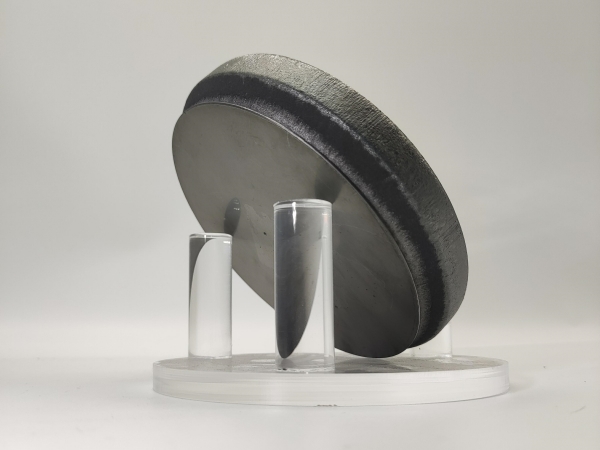
As a core substrate for high-end optics, semiconductor lithography, and high-energy laser systems, fused silica features ultra-broadband transmittance, ultra-low scattering loss, and excellent laser damage resistance. Compared with conventional optical glasses, fused silica exhibits more stable ultraviolet (UV) and near-infrared (IR) optical performance, together with controllable structural and optical evolution under long-term high-energy laser irradiation. This article systematically analyzes the optical advantages and laser-induced damage mechanisms of fused silica from three key dimensions: optical absorption characteristics, Rayleigh scattering loss, and laser-induced modification effects, providing theoretical support for high-end optical component selection, process optimization, and large-scale industrial applications.
1. Overview of Core Optical Properties of Fused Silica
Benefiting from its ultra-wide band gap,
fused silica achieves high optical transparency ranging from deep ultraviolet to infrared bands, covering ultra-precision deep-UV lithography (below 300 nm) and infrared optical waveguide applications. It is one of the few optical materials compatible with both deep-UV lithography and long-wave infrared transmission systems.
Optical transmittance, absorption behavior, and Rayleigh scattering are three fundamental indicators that determine the optical quality, imaging accuracy, transmission efficiency, and long-term service stability of fused silica. Although refractive index is also critical, it is less sensitive to fabrication processes and will not be discussed in this review. In practice, the optical loss of fused silica is predominantly governed by microstructural disorder, intrinsic defects, and extrinsic doping defects.
2. UV and Infrared Spectral Absorption Characteristics
The spectral absorption loss of fused silica is divided into UV absorption and infrared absorption, which are dominated by intrinsic electronic transitions, structural vibrational modes, and impurity-related defects. Different defect types and doping elements significantly shift the absorption edge and alter optical loss.
2.1 Vacuum Ultraviolet (VUV) Absorption and Defect Modulation
The UV absorption edge of fused silica originates from the Urbach tail of the 10.4 eV SiO₂ absorption band, with an intrinsic fundamental absorption edge at 153 nm. In practical materials, microstructural disorder and various point defects strongly shift the UV edge and degrade deep-UV transmittance.
 Figure 1: VUV transmittance spectra of fused silica with different defect compositions
Figure 1 compares the vacuum ultraviolet transmittance (150–200 nm) of typical fused silica samples with different impurities (10 mm optical path, including reflection and scattering losses):
- Sample A (1270 ppmwt OH) and Sample B (1300 ppmwt Cl): SiOH and SiCl introduce electronic transition states near the UV absorption edge, causing spectral red shift and degraded short-wavelength transmittance. Their absorption cross-sections at 157 nm are 16.8×10⁻²⁰ cm² and 6.3×10⁻²⁰ cm², respectively. These defects dominate VUV loss but have negligible influence at 193 nm.
- Sample C (2 ppmwt low OH): Reducing hydroxyl content moves the UV edge closer to the intrinsic limit and significantly improves VUV transmittance.
- Sample D (5000 ppmwt F-doped): Fluorinated fused silica delivers the highest 157 nm transmittance and serves as the optimal material for deep-UV optical components.
Fluorine doping is a vital modification strategy for improving deep-UV performance, with three major benefits. First, F replaces hydroxyl groups and eliminates OH-related UV absorption. Second, SiF bonds introduce no extra electronic states near the UV edge. Third, fluorine preferentially passifies strained 3‑membered and 4‑membered ring structures, reducing structural disorder and suppressing intrinsic UV absorption. Modern F-doped fused silica achieves internal transmittance higher than 80%/cm at 157 nm.
Intrinsic non-stoichiometric defects are another major source of UV absorption. The oxygen-deficient center ODC1 (≡Si-Si≡) produces a characteristic absorption band at 163 nm, while interstitial oxygen causes excess absorption from 155 nm to 175 nm. Typical lithography-related defects include E’ centers (215 nm absorption tail extending to 193 nm), non-bridging oxygen hole centers (NBOHC, 260 nm tail extending to 248 nm), and ODC2 defects (248 nm peak). These defect-induced absorptions severely degrade optical performance at 193 nm and 248 nm, the mainstream lithography wavelengths. Therefore, strict defect control is essential for UV-lithography-grade fused silica.
2.2 Infrared Absorption and Hydroxyl-Induced Loss Mechanism
The infrared absorption edge of fused silica arises from structural vibrational tails and water-related phonon modes. The fundamental vibrational bands are located at 9.1 μm, 12.5 μm, 21.3 μm, and 36.4 μm, with overtone and combination bands ranging from 3.0 μm to 4.5 μm. Hydroxyl groups dominate near-infrared loss, with a fundamental stretching band at 2.73 μm and overtone bands at 2.24 μm and 1.37 μm, which directly affect optical fiber communication bands.
 Figure 2: IR transmittance of commercial fused silica (Corning HPFS 8655 and HPFS 7980)
Figure 2 shows the infrared transmittance of two commercial fused silica products (10 mm path length). Low‑OH HPFS 8655 exhibits negligible hydroxyl absorption, while high‑OH HPFS 7980 shows strong OH-related absorption bands. This explains why long-haul optical fibers require ultra-low-OH fused silica. Deuterium substitution is commonly adopted in industry to shift OH absorption bands toward longer wavelengths and avoid signal loss at 1310 nm and 1550 nm telecom bands.
Benefiting from ultra-high purity, fused silica avoids strong UV-Vis-IR absorption caused by alkali metals and transition metal impurities, which is a decisive advantage over conventional silicate glasses.
3. Rayleigh Scattering Loss and Optimization Mechanism
Rayleigh scattering is a dominant optical loss source in fused silica, induced by subwavelength fluctuations in density and composition. It follows the classic 1/λ⁴ wavelength dependence, resulting in much higher scattering loss in the UV region than in the IR region, and it remains the primary attenuation factor for long-distance optical fibers.
Total Rayleigh scattering loss (αRS) consists of density-fluctuation loss (αρ) and concentration-fluctuation loss (αc), expressed as:
αRS = αρ + αcDensity-fluctuation loss is positively correlated with fictive temperature (
Tf ), while concentration-fluctuation loss scales with
(dn/dc)2. For pure, undoped fused silica, scattering loss originates solely from density fluctuations, and a low fictive temperature is essential for ultra-low scattering performance.
Due to the highly rigid silica network, fused silica has a high glass transition temperature (>1200 °C) and low fragility, leading to extremely slow structural relaxation. Conventional cooling rate control cannot effectively reduce

. Hence, industrial optimization relies on
doping modification combined with precise thermal control:
- Alkali and hydroxyl doping accelerate structural relaxation and reduce Rayleigh scattering by up to 20%; wet fused silica generally exhibits lower scattering than dry fused silica.
- Fluorine and chlorine doping activate low-temperature sub-relaxation processes and homogenize microstructures. Fluorine introduces minor concentration fluctuation loss, whereas chlorine causes no additional scattering penalty.
- Advanced post-treatment technologies further suppress scattering. Hot compression reduces scattering loss by over 30% by shrinking micro-voids, while pressure-quenching is predicted to achieve a loss reduction of more than 50%.
4. Laser-Induced Modification and Damage Mechanisms of Fused Silica
Under high-energy deep-UV laser irradiation, fused silica undergoes reversible or irreversible optical and structural modifications, including induced absorption, densification/rarefaction, and micro-channel formation. These effects degrade lithography imaging accuracy and throughput but can also be utilized for laser writing of gratings and waveguides. This section focuses on laser-induced degradation mechanisms relevant to short-wavelength lithography.
4.1 Laser-Induced Color Centers and Dynamic Absorption
UV laser photons with energy greater than 5 eV break Si-O bonds and generate typical color centers such as E’ centers and non-bridging oxygen hole centers (NBOHC), introducing selective absorption bands that deteriorate transmittance at 193 nm and 248 nm. The process involves multiphoton absorption and presents dynamic behavior: absorption rises under laser exposure and partially recovers in darkness.
Molecular hydrogen serves as a critical defect passivation medium. H₂ reacts with E’ centers to form stable SiH structures and eliminate UV-visible absorption. However, subsequent laser irradiation photolyzes SiH bonds and regenerates E’ centers, causing a “redarkening” phenomenon.
 [Figure 3: In-situ experimental setup for laser-induced absorption measurement]
 [Figure 4: Temporal decay of laser-induced absorption for samples with different H₂ concentrations]
 [Figure 5: Typical fade-and-redarkening dynamic response curve under laser on/off cycling]
Experimental results demonstrate that H₂-free fused silica shows the strongest induced absorption and negligible recovery. Increasing molecular hydrogen concentration effectively suppresses defect formation and improves optical recovery. In addition, intrinsic ODC defects significantly accelerate laser damage by dissociating into E’ centers under high-energy photons.
Laser-induced absorption is strongly correlated with defect luminescence. Linear absorption at 193 nm corresponds to 550 nm photoluminescence, while nonlinear absorption couples with 650 nm luminescence originating from NBOHC defects, providing an effective characterization method for laser damage evaluation.
4.2 Laser-Induced Densification and Rarefaction
Long-term high-energy laser irradiation induces microscopic density changes in fused silica, categorized as
densification (density increase) and
rarefaction (density decrease). The resulting ppm-level refractive index variation and tiny birefringence accumulate in long-path deep-UV systems and eventually cause imaging distortion and accuracy degradation.
Laser-induced density evolution follows a power-law relationship. For 193 nm irradiation, the power exponent is approximately 0.6, consistent with classical radiation compaction theory. Notably, fused silica presents wavelength-dependent responses: 157 nm laser initially induces rarefaction and gradually transitions to densification with prolonged exposure.
.webp)
 [Figure 6: Refractive index evolution under different fluence, OH content, and H₂ concentration conditions]
[Figure 6: Refractive index evolution under different fluence, OH content, and H₂ concentration conditions]High-OH and high-H₂ samples achieve the rarefaction-to-densification transition at fewer pulses under higher fluence. For H₂-free samples, higher hydroxyl content delays the transition. The competing mechanism consists of OH photolysis-induced volume expansion (rarefaction) and lattice rearrangement-induced structural compaction. IR spectroscopy confirms that laser irradiation increases hydrogen-bonded OH species and further promotes structural modification.
4.3 Laser Self-Focusing and Micro-Channel Damage
The coupling effect of laser-induced absorption and densification triggers self-focusing behavior and eventually forms irreversible micro-channels. Under continuous irradiation, local refractive index elevation creates a waveguide-like structure and shrinks the mode field. Once the localized optical intensity exceeds the damage threshold, plasma sparks occur and produce permanent micro-channels.
 [Figure 7: Morphology of micro-channel formation and self-focusing evolution]
Micro-channeling is irreversible structural damage that permanently destroys optical performance. Fused silica with low compaction rate and high refractive index homogeneity exhibits the best resistance to micro-channel damage, making it the preferred material for high-energy laser and deep-UV lithography systems.
5. Conclusion and Industrial Selection Guidelines
In summary, the deep-UV transmittance of fused silica is governed by hydroxyl impurities, halogen doping, and intrinsic structural defects. Fluorine doping and low‑OH purification are the core approaches for high-performance deep-UV optics. Rayleigh scattering loss can be significantly optimized via doping modification, low-temperature relaxation, and high-pressure post-treatment. Laser-induced color center generation, density variation, and micro-channel damage are the main factors limiting the service life and precision of high-end optical components, which can be effectively suppressed by hydrogen passivation, composition optimization, and microstructure homogenization.
In industrial mass production, JXT provides standardized and customized fused silica products covering
2–12 inch full-size specifications. Manufactured via mature flame hydrolysis technology,
JXT fused silica features ultra-low impurity concentration, minimal intrinsic defects, superior optical uniformity, and excellent laser resistance. The products fully meet the stringent requirements of semiconductor deep-UV lithography, high-energy laser systems, high-end optical communication, and precision infrared optical equipment, bridging academic research and industrial high-end application.