1. Introduction
Fused silica (SiO₂) is renowned as one of the highest-quality optical glasses worldwide, benefiting from its superior comprehensive performance . It possesses an ultra-broad high-transmission spectrum spanning deep ultraviolet to infrared bands, alongside prominent advantages including excellent radiation resistance, low birefringence, high refractive index homogeneity, and outstanding chemical and thermal stability . Supported by scalable and cost-effective large-size manufacturing technologies, fused silica has become a critical optical material for high-end precision systems, covering deep-ultraviolet lithography, optical fiber communication, high-energy laser equipment and aerospace exploration.
Fused silica exhibits unique “deceitful simplicity” in material science . Despite its single-component chemical composition, it delivers atypical physical and chemical behaviors distinct from conventional silicate glasses and cannot be fabricated via traditional glass melting methods . Its distinctive structural and performance characteristics have sustained long-term research attention, with over 150 relevant papers published annually since 2022. This review systematically elaborates the manufacturing processes, microstructural features and inherent defects of high-performance fused silica optical materials.
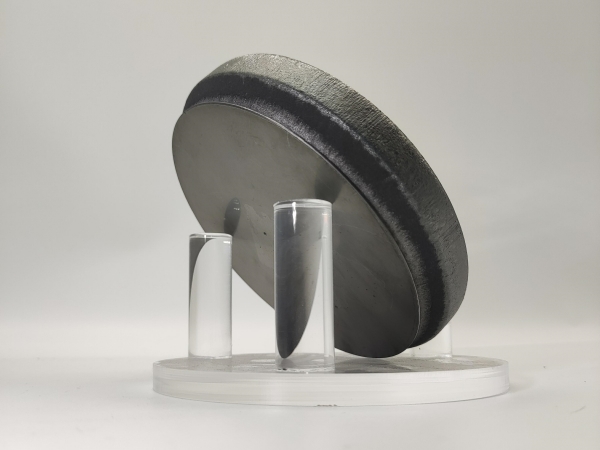
In terms of commercial product supply, JXT provides standardized and customized fused silica products covering sizes from 2 inches to 12 inches. These large-size fused silica components are fabricated via mature flame hydrolysis processes with ultra-low impurity content and excellent optical uniformity, fully meeting the high-precision application requirements of industrial optical systems, laser devices and semiconductor lithography equipment.
2. Manufacturing Technology of Fused Silica
2.1 Classification and Impurity Characteristics of Silica Glass
The terms “fused quartz” and “
fused silica” are frequently confused in practical applications, but they correspond to two distinct types of silica glass with essential differences in raw materials, preparation processes and impurity levels. Fused quartz (Type I/II) is produced by melting natural or purified crystalline silica, while fused silica (Type III/IV) is a high-purity synthetic silica glass fabricated from chemical precursors.
Impurity content is the core index distinguishing the optical performance of the two materials, as trace impurities directly cause optical absorption and reduce transmittance. Fused quartz generally contains 20–50 ppmwt of impurities, mainly aluminum, alkali metals and transition metal elements. In contrast, synthetic fused silica has an extremely low impurity content of less than 1 ppmwt, endowing it with superior optical transmission performance, especially in the ultraviolet band . The typical performance parameters of commercial fused silica and fused quartz products are summarized in
Table 1.

2.2 Core Preparation Process: Flame Hydrolysis
Multiple synthetic processes can be used for fused silica preparation , among which flame hydrolysis is the mainstream commercial manufacturing method for high-performance optical fused silica. This technology was first developed and applied by Dr. James Franklin Hyde in 1934 . The basic principle is to vaporize silicon-containing chemical precursors and inject them into a high-temperature methane-oxygen or hydrogen-oxygen flame for hydrolysis reaction, thereby generating amorphous silica glass.
Taking silicon tetrachloride (SiCl₄) as the typical precursor, the flame hydrolysis reaction follows Equation (1):

The primary product of the reaction is nano-scale silica glass particles with a particle size of approximately 100 nm, which are defined as “soot” . To reduce environmental pollution caused by halogen-containing byproducts, halogen-free precursors such as siloxanes have been widely adopted in modern industrial production to replace traditional SiCl₄.
2.2.1 Direct Laydown Process
In the direct laydown process, silica soot generated by flame hydrolysis is directly deposited on a refractory substrate and synchronously sintered into transparent bulk glass. The process flow is shown in
Figure 1. Fused silica prepared by this method is classified as Type III fused silica, which retains a high hydroxyl (OH) content of 800–1200 ppmwt due to the incorporation of hydrogen and water vapor during the high-temperature deposition and sintering process. Typical commercial products of Type III fused silica include Corning HPFS 7980, Suprasil 1/2, Spectrosil 2000 and KU-1.
 Figure 1
. Schematic diagram of the direct laydown flame hydrolysis process.
2.2.2 Soot-to-Glass Process
Different from the direct laydown method, the soot-to-glass process first collects silica soot on a rotating mandrel to form a porous soot preform, and then completes high-temperature sintering to obtain transparent fused silica glass. The core advantage of this process is that the porous preform can be dried and doped with functional elements before sintering, which effectively optimizes the internal composition and structural uniformity of the glass.
Two mature derivative processes are widely used in industrial production, namely outside vapor deposition (OVD) and vapor axial deposition (VAD). The OVD process adopts a structural design where the rotating mandrel is perpendicular to the moving flame, and soot is uniformly deposited on the mandrel surface (
Figure 2(a)) . After the deposition is completed, the mandrel is removed to obtain a pure porous preform. In the VAD process, the mandrel acts as a seed rod, and the soot preform grows axially along the seed rod (
Figure 2(b)) . Both processes are also core preparation technologies for high-performance optical fibers.
 Figure 2
. Schematic diagrams of typical soot-to-glass processes. (a) Outside vapor deposition (OVD) process; (b) Vapor axial deposition (VAD) process.
High-purity dry fused silica without detectable OH groups can be prepared by the soot-to-glass process. The preform is usually dried by introducing chlorine or chlorinated gas at high temperature to remove residual water and hydroxyl groups . Functional doping can be realized by introducing doping gases such as SiF₄ and CF₄ during deposition or sintering, and fluorine doping is the most common modification method . Typical commercial low-OH fused silica products include Corning HPFS 8655 and AGC AQ2.
As shown in
Table 1, synthetic fused silica exhibits significantly better ultraviolet transmission performance than fused quartz. Meanwhile, the annealing point of low-OH dry fused silica is more than 100 °C higher than that of high-OH Type III fused silica, showing better high-temperature structural stability.
3. Microstructure Characteristics of Fused Silica
3.1 Basic Continuous Random Network (CRN) Model
The microstructure of silica glass is universally interpreted based on Zachariasen’s classic structural model, which proposes that fused silica forms a disordered three-dimensional network structure composed of corner-sharing SiO₄ tetrahedral units (
Figure 3(a)) . This continuous random network (CRN) model has been fully verified by X-ray diffraction, neutron diffraction, nuclear magnetic resonance (NMR) tests and molecular dynamics simulation results, and has become the basic theoretical framework for studying silica glass structure .
 Figure 3
. Multi-scale structural morphology of silica glass.
(a) Zachariasen’s classic SiO₄ tetrahedral disordered network model
(b) Evans-King 3D ball-and-stick structural model;
(c) Molecular dynamics simulation structure of fused silica ;
(d) ADF-STEM atomic-scale image of two-dimensional amorphous silica (scale bar: 0.5 nm) .
On the basis of the CRN model, researchers have constructed diverse visual structural models. The early Evans-King ball-and-stick physical model intuitively presents the spatial connection mode of tetrahedral units (
Figure 3(b)). With the development of computer technology, high-precision molecular dynamics simulation has become the mainstream means of structural characterization (
Figure 3(c)) . In 2012, Huang et al. obtained the first atomic-scale microscopic image of silica glass via ADF-STEM technology, which is highly consistent with Zachariasen’s classic theoretical model, directly verifying the authenticity of the CRN structure (
Figure 3(d)) .
In view of the abnormal physical properties of fused silica different from multi-component glasses (e.g., density increases with the rise of fictive temperature

), researchers have proposed modified theories for the CRN model, including coexisting multi-scale structures and polyamorphism . Although these modified theories explain the special structural evolution characteristics of fused silica, they do not subvert the basic framework of the CRN model .
3.2 Ring Structure Distribution and Structural Evolution
The CRN network is composed of SiO₄ tetrahedra forming closed ring structures of different sizes. Zachariasen’s classic model clearly presents five-to-eight-membered tetrahedral rings. Statistical structural analysis shows that the fused silica network is dominated by five-, six- and seven-membered rings, which constitute the stable main structure of the glass (
Figure 4) .
 Figure 4
. Statistical distribution characteristics of ring sizes in fused silica network
In addition to stable large-size rings, a small number of three- and four-membered tiny rings exist in the fused silica network. Although these tiny ring structures are not macroscopic defects, the internal Si-O-Si bonds have obvious structural strain compared with large rings, resulting in higher chemical reactivity and photosensitivity. Raman spectrum tests confirm that the characteristic peaks at 495 cm⁻¹ (D1) and 606 cm⁻¹ (D2) of silica glass correspond to four-membered and three-membered rings respectively.
The content of tiny ring structures is closely related to the fictive temperature
of the glass. Studies have shown that the concentration of three- and four-membered rings increases with the rise of
, and the D2 peak intensity reaches the minimum at 950 °C, corresponding to the minimum density of fused silica . Infrared spectral analysis based on the 2260 cm⁻¹ Si-O-Si stretching vibration further proves that the average bond angle of the silica network decreases with the increase of
. Based on Raman and infrared spectral characteristics, the
value and structural relaxation kinetics of fused silica can be accurately characterized, which is widely used in structural evolution research.
3.3 Intrinsic and Extrinsic Structural Defects
Ideal CRN models cannot fully reflect the structural characteristics of actual fused silica materials. Commercial and synthetic fused silica inevitably contains various structural defects, which are the key factors affecting its optical transmission, radiation resistance and service stability. These defects are divided into intrinsic non-stoichiometric defects and extrinsic compositional defects.
Intrinsic defects are caused by the abnormal coordination of silicon-oxygen atoms, including typical defect types such as E’ center (≡Si•), non-bridging oxygen hole center (NBOHC, ≡Si-O•), and oxygen deficient center (ODC, ≡Si-Si≡, =Si••) . These defects are inherent to the disordered network structure of fused silica and are easy to generate and evolve under high temperature and radiation conditions.
Extrinsic defects originate from impurity elements introduced during the manufacturing process. Elements such as H, Cl and F will form terminal bonds (≡Si-X, X = H, OH, Cl, F) to break the integrity of the silica network , or exist in the form of dissolved gas molecules (H₂, O₂, Cl₂, F₂) in the glass matrix . In addition, radiation exposure can induce the generation or annihilation of defects, further changing the optical performance of
fused silica. The types and evolution mechanisms of optical defects in silica glass have been systematically summarized in existing classic reviews .

In terms of commercial product supply, JXT provides standardized and customized fused silica products covering sizes from 2 inches to 12 inches. These large-size fused silica components are fabricated via mature flame hydrolysis processes with ultra-low impurity content and excellent optical uniformity, fully meeting the high-precision application requirements of industrial optical systems, laser devices and semiconductor lithography equipment.